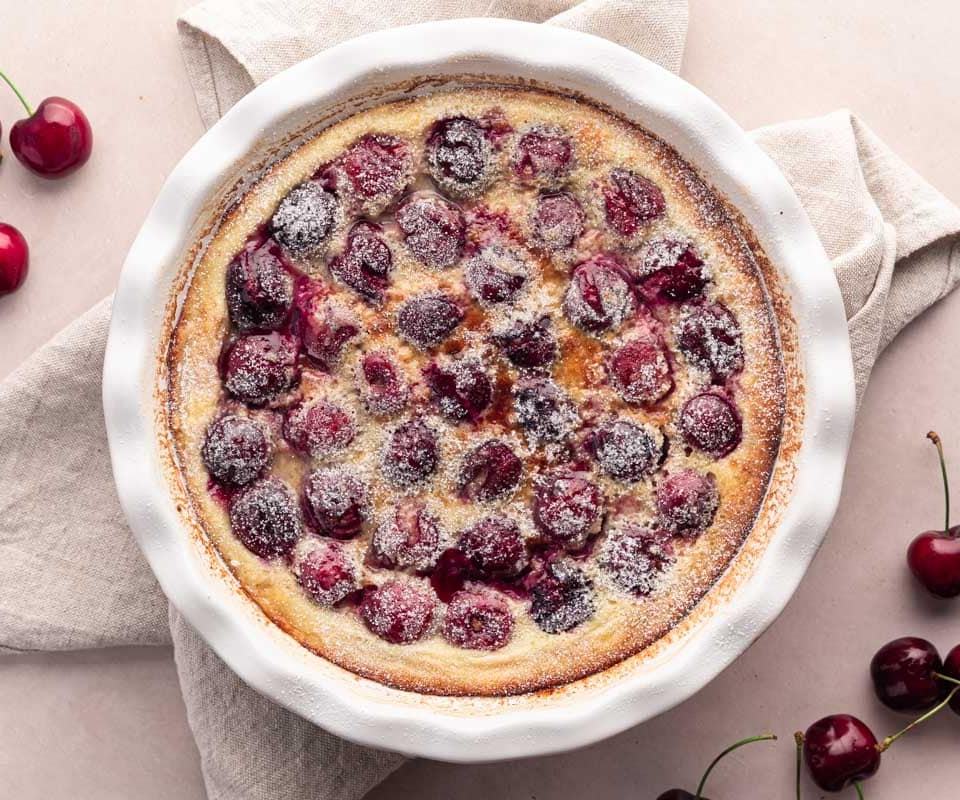
Cherry Clafoutis
A custard-like French dessert with dark sweet cherries, baked until golden and softly set with a delicate, silky texture.
Nutrition per 100g
Pan
Ingredients
- 4piece Eggs, without shell
- 80g All-purpose flour
- 240ml Whole milk
- 500g Sweet cherries, pitted
- 90ml Heavy whipping cream, 30-36% fat
- 90g Granulated sugar
- 6g Vanilla extract
- 10g Butter, for greasing
Method
Preheat the oven to 180°C. Butter a baking dish and lightly dust with flour all over.
Wash and pit the cherries using a cherry pitter and place into a bowl. Set aside until assembling.
In a large bowl, whisk the eggs and granulated sugar until slightly foamy. Add all-purpose flour and mix to form a no-lump base. Stir in heavy whipping cream, then whole milk and vanilla extract. Mix everything until smooth, pourable batter.
*Alternatively, blend all batter ingredients for 1 minute.
Layer the pitted cherries in the bottom of the prepared dish. Pour batter over cherries, covering evenly.
Bake in a preheated to 170°C oven for 35–40 minutes, until golden. It should be softly set; a wooden skewer inserted in the middle should come out clean.
Remove from the oven and let it sit for at least 20 minutes before serving.
Serve slightly warm, dusted with powdered sugar, or chill for a firmer set consistency.
Storage
At room temperature
Clafoutis should be transferred to the refrigerator within 2 hours of baking. If not served warm, let it cool, then cover and refrigerate.
In the refrigerator
Store clafoutis in an airtight container, for up to 3 days. Before serving, bring it to room temperature for 30–40 minutes, or enjoy it chilled.
You can also reheat it in the oven at 160°C for 5–10 minutes to restore its soft texture.
In the freezer
Freezing is not recommended for clafoutis. Once thawed, its delicate custard-based texture may become grainy or separated. For the best texture, enjoy it fresh or keep it refrigerated.
Notes
Feel free to adjust the sugar depending on your taste and cherry variety. Sweet cherries tend to need less, while sour cherries may need a bit more to balance the flavor.
Place the cherries into the baking dish just before pouring the batter over them. Otherwise, they may release juice that can affect the texture and color of the clafoutis.
Clafoutis slightly puffs up during baking, but settles down as it cools.
FAQ
What is Clafoutis?
Clafoutis is a traditional French baked dessert made with fruit covered in a light custard-like batter. Traditionally, fresh dark cherries are used, becoming incredibly soft, juicy, and rich in flavor with subtle wine-like notes as they bake, while modern variations may include raspberries, blueberries, plums, pears, peaches, and other seasonal fruits.
Its texture is creamy with a slight jiggle in the center, resembling a flan, pudding, or delicate baked custard. Served warm or at room temperature, clafoutis is a classic treat that can be easily prepared whenever you are craving a comforting yet elegant dessert, whether for a family gathering or a party.
Do I need to pit cherries for clafoutis?
Yes, pit the cherries for a clafoutis, it’s more practical choice. The fruit blends smoothly into the batter, giving a pure taste, without the worry of hidden pits.
To keep the cherries' shape and juiciness, it is best to use a cherry pitter, or gently halve them with a knife and let any excess juice drain off (adding that extra juice can make the clafoutis slightly watery and turn the custard a dull, ruby-grey color).
However, if you prefer a traditional French-style clafoutis, you can use whole cherries. They hold their shape and keep all their juices inside as they bake, adding subtle nutty notes as you enjoy.
Can I substitute fresh cherries with frozen in clafoutis?
Yes, you can substitute fresh cherries with frozen in clafoutis, although fresh cherries are preferred. It is best to thaw them first and drain the juice so it won’t affect the texture.
However, if you do want to use them unthawed, toss them in cornstarch before baking — it helps bind the moisture as it bakes. Keep in mind that the baking time may be slightly longer, since the cherries defrost in the oven. The batter may turn a bit softer and more moist, and the color can shift pinkish-grey.
What kind of baking dish to use for clafoutis?
For the best texture, use a ceramic or glass baking dish for your clafoutis. They distribute heat evenly, so the dessert stays delicate with thin golden edges. Just make sure it is at least 2 inches deep to safely hold the liquid batter and fruit.
An enameled cast-iron skillet is a great alternative. It heats more slowly and evenly, but since it retains heat for a long time, there is a higher risk of overbaking — the edges may become too thick and more cooked than the center.
Other than that, any oven-safe baking dish works well, whether silicone molds, round pans, individual ramekins, or disposable tins. You’ll likely need to adjust both baking time and temperature to avoid overbrowning or an underbaked center, since some pans conduct heat quickly or bake faster depending on their size and type.
How do I know when clafoutis is done?
To know when clafoutis is done, look for visual cues: it should puff up slightly, the edges turn golden, and the center remain gently quivering like a soft custard. Although baking time is usually given, it serves only as a guideline since it depends on factors such as the size and type of pan, oven temperature, the juiciness of the fruit, and the starting temperature of the ingredients.
To be sure, insert a skewer into the middle—it should come out clean with not wet batter. If using a thermometer, an internal temperature shouldn’t go higher than 77-79 °C, above that the texture may curdle. Once removed from the oven, clafoutis will continue to cook slightly from residual heat. For the best texture, let it rest for about 20 minutes before serving.
Is clafoutis better hot or chilled?
Clafoutis can be enjoyed either warm or chilled. Once rested, warm freshly baked clafoutis is very delicate, creamy, and juicy, with its signature custard, melt-in-the-mouth texture. Fully chilled clafoutis, on the other hand, resembles flan or soft pudding: the custard sets more firmly, becoming smooth and sliceable with a gentle creaminess.
After refrigeration, you can enjoy it chilled or bring it to room temperature (take it out 30–40 minutes before serving). You can also warm it up in a preheated oven at 160°C for about 5–10 minutes. This restores its fresh-baked, delicate texture.
Why clafoutis turn rubbery?
Clafoutis may turn rubbery if it’s overbaked or the heat is too high. In that case, the egg proteins tighten, and instead of staying tender and moist, the custard becomes dense and slightly grainy. Some of the moisture can also get trapped underneath, leaving the bottom soggy.
Adjusting the recipe proportions, like adding extra flour or eggs can also affect the consistency, giving the clafoutis a chewy, gummy texture rather than a soft, custard‑like one.
Can I prepare the clafoutis batter ahead of time?
Yes, you can prepare the batter the day before. Store it in the fridge for up to 24 hours and use it when you are ready to bake. Keep in mind that the batter may become slightly greyish, due to oxidation and gluten changes which can affect the appearance of the baked clafoutis.
You can also pit the cherries in advance, but they may release juice as they sit, so it’s best to drain them well before assembling, otherwise the custard turn slightly soggy and ruby-dull in color.
Alternatively, you can fully bake clafoutis ahead of time and store it in the refrigerator for up to 3 days.