Boiled Eggs
Soft, jammy, or hard-boiled, perfect eggs can be achieved with either the hot-start or cold-start method.
Nutrition per 100g
Ingredients
- 9piece Eggs, cold
Method
Bring a large wide pot filled 2/3 full with water to a rolling boil.
Using a slotted spoon, carefully lower the cold eggs into the water one by one. Once the water returns to a boil, reduce the heat slightly to keep the water at a gentle boil, with continuous small bubbles.
Set your timer from the moment you lower the eggs into the water and cook according to your preferred yolk firmness:
5 min — lightly set whites with a fully runny yolk;
6 min — just-set whites with a runny yolk and very lightly set edges starting to thicken;
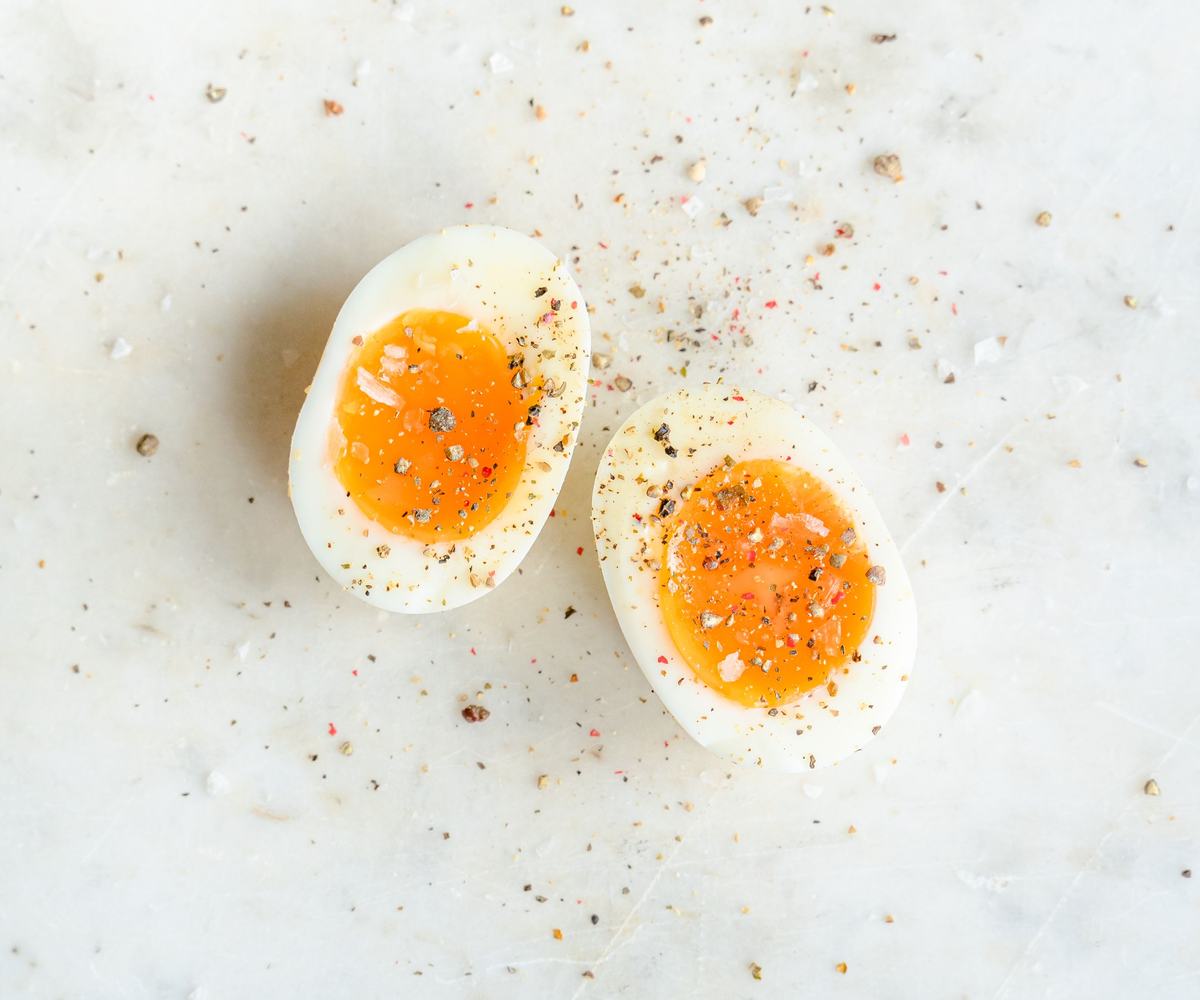
7 min — delicate set whites with a creamy, semi-jammy yolk;
8 min — tender, nicely set whites with a thick, jammy yolk;
9 min — fully set whites with a soft, moist yolk;
10 min — firm whites with a fully set, soft yolk;
11–12 min — fully firm whites with an evenly set yolk;
13–15 min — very firm whites with a dry yolk.
Once cooked, transfer the eggs immediately to an ice water bath or run them under cold water for a couple of minutes. Then remove and let them air‑dry briefly.
Alternatively, for the cold-start method, place cold eggs in a pot and cover with at least 2.5 cm of cold water. Once the water reaches a full boil, reduce the heat to a small bubbling. Since the pre-boil stage already partially heats the eggs, you may need about a minute less than in the hot-start method for the same yolk texture . Then, cool them in an ice water bath.
Peel and enjoy freshly boiled eggs right away, or keep them unpeeled in the refrigerator for later use.
Storage
At room temperature
Leave them at room temperature only while serving, then refrigerate promptly.
In the refrigerator
Soft‑boiled eggs should be enjoyed within about 2 days, while hard‑boiled eggs last longer, up to 5-7 days if left in the shell. Once peeled, they stay at their best for around 3 days, sealed in an airtight container.
In the freezer
Boiled eggs do not freeze well, once thawed, the whites lose their structure.
Yolks can be frozen for up to 3 months and should be thawed overnight in the refrigerator when needed.
FAQ
Which method is better for boiling eggs Hot-start or Cold-start?
The hot-start method, where you place cold eggs directly into already boiling water, is more time-reliable and gives you better control over the yolk texture. The sudden heat also makes peeling easier, though you must lower the eggs carefully to minimize the risk of cracking.
On the other hand, the cold-start method is more forgiving: the eggs go into cold water from the beginning, which lowers the chance of cracked shells. However, timing is a bit less precise— the longer the pre‑boil stage, the more the eggs are already warmed. Once you find the right timing for your pot, water level, and heat setting, you can get very consistent results.
When to set the timer for boiling eggs?
When using the hot-start method, set the timer as soon as the first eggs are placed into the boiling water. For soft‑boiled eggs, keep them between 5 and 7 minutes for a runny yolk. For a jammy, moist texture, aim for about 7 to 9 minutes. For hard‑boiled eggs, cook between 10 and 15 minutes.
With the cold‑start method, start timing once the water reaches a full boil. On average, you may need about 1–2 minutes less than with the hot‑start method for the same yolk texture. For consistent results, keep the same pot size, water level, egg size, and heat setting each time.
Why should I use an ice bath after boiling eggs?
Using an ice bath for boiled eggs immediately stops the cooking process , keeping the exact yolk consistency — whether runny, jammy, or firm, and makes peeling much easier because of the sudden thermal shock. To do it, fill a bowl with cold water and plenty of ice, then submerge the eggs with a slotted spoon for about 5 minutes or so.
It’s also more water-efficient, but if you don’t have ice, cooling the eggs under cold running water is a perfectly good alternative — simply leave them until fully cooled.
How to peel boiled eggs easily?
Once boiled, immediately plunge the eggs into an ice water bath for several minutes. This quick “thermal shock” helps loosen the shell. To peel, gently tap the egg all over with the back of a spoon, roll adittionally, as needed, then start from the wider end, where the air pocket is. This way, you can lift the shell off more cleanly. Peeling under cold running water also helps the shell slide away, especially with farm-fresh eggs, which are usually harder to peel.
How to store boiled eggs, peeled or unpeeled?
For the best quality, store boiled eggs unpeeled. The shell protects the egg from drying out, absorbing odors, and losing its natural texture.
Peeled boiled eggs can also be stored, but they are more delicate. Without the shell, they dry out faster and can lose their shape if packed too tightly. To keep them fresh, store eggs in a single layer in an airtight container, leaving some space between each one.
In both cases, whether peeled or unpeeled, boiled eggs should be refrigerated within 2 hours after cooking.
How long do boiled eggs last in the fridge?
Hard-boiled eggs in the shell last up to 5–7 days in the refrigerator, while peeled keep their best quality for about 3 days,
Soft-boiled eggs should be eaten within 2 days, if they have been peeled, they are best enjoyed the same day, though they can be safely stored for up to 2 days as well.
Can I freeze boiled eggs?
Freezing boiled eggs is not recommended because it significantly changes their texture. The egg whites contain a high amount of water, and after thawing they become rubbery and watery, making them unpleasant to eat. For best quality, boiled eggs should be stored in the refrigerator instead of the freezer.
However, you can freeze boiled egg yolks. Yolks contain less water and more fat, so they hold their texture well after freezing. Cooked yolks can be frozen for up to 3 months and thawed overnight in the refrigerator when needed.