Multiple Poached Eggs
The recipe includes sieving and a “mass sliding” technique, making it easy to poach a batch of fresh eggs at the same time.
Nutrition per 100g
Ingredients
- 5piece Eggs, without shell
Method
Fill a wide pan, pot, or deep skillet with enough water so the eggs can cook freely without crowding. Bring to a gentle simmer at around 88°C.
Crack the eggs into a fine-mesh sieve set over a bowl to let the loose, watery part of the egg whites drip out.
Hold the sieve just above the simmering water. Slowly tilt it to let the eggs slide in one by one. Move it a little as you go so they don’t stick together.
Let them cook for at least 2 minutes undisturbed, to set whites into a neat shape. Then, gently slide a slotted spoon underneath to ensure the eggs haven’t stuck.
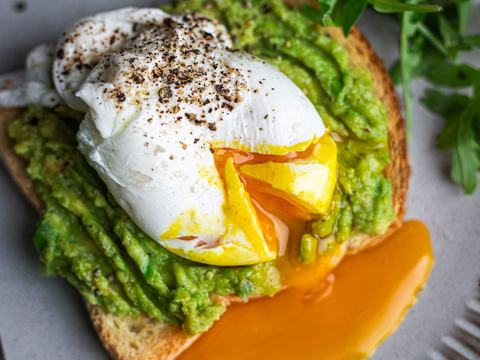
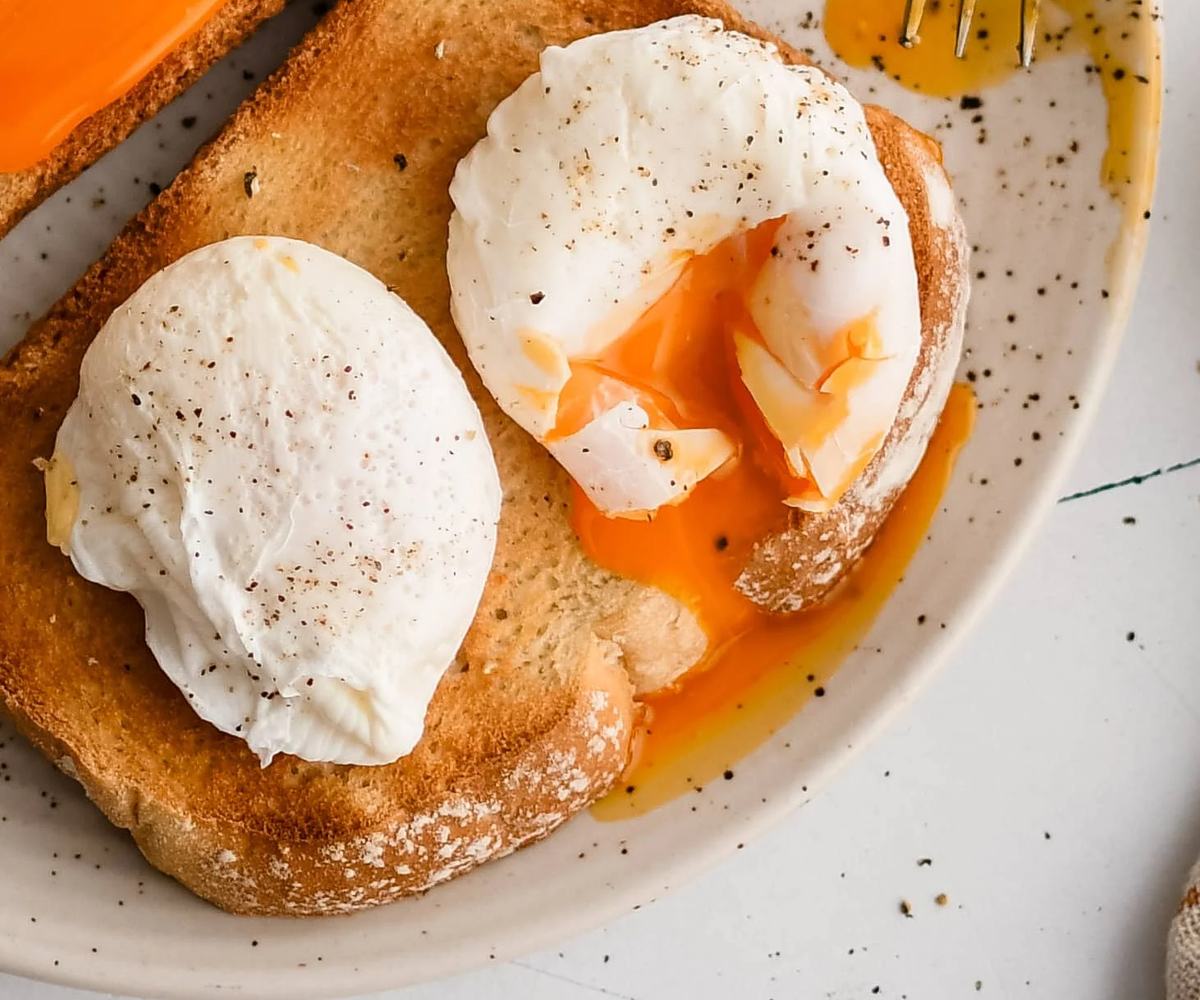
Cook for a total of 3 minutes for a classic runny yolk, 4–5 minutes for a jammy center, or slightly longer for a fully set yolk.
Lift the eggs out of the water and transfer them to a tray or plate lined with thick, lint-free paper towel. Let them drain for about a minute, then promptly transfer to a serving plate so they don't stick to the paper.
Serve them as an accompaniment to the main dish, or enjoy them on their own.
Storage
At room temperature
Eggs should only be left out while serving. Otherwise, keep them refrigerated.
In the fridge
If you are making them as a make-ahead preparation, keep the eggs submerged in cold water in an airtight container for up to 2 days. Reheat by placing them in simmering water for 30-60 seconds.
If any eggs remain after serving, place them in an airtight container and refrigerate as they are — no water needed.
In the freezer
Is not recommended; it affects the texture, making the eggs rubbery and watery once thawed.
Notes
Fresh eggs have firmer whites, so they don’t spread as much in the water. Cold eggs also tend to hold their shape better, set faster, and wrap more neatly around the yolk. If you’re unsure about freshness, a small splash of vinegar can help the egg whites set faster, but it isn’t necessary for fresh eggs.
When cold eggs are added to simmering water, the temperature drops—the more eggs, the greater the drop. If the water falls below 82°C once the eggs are added, the whites will not set neatly around the yolk but will instead spread out. A larger volume of water retains heat more effectively, so the pot should be filled generously to ensure the temperature stays within the ideal 82°C-85°C range during cooking.
Watery, loose egg whites tend to form wispy strips during cooking. This makes it harder to control both the shape and doneness of the eggs, as the water becomes cloudy with floating whites clouds. If you prefer to skip the sieving step, crack the eggs into a bowl and slide them into the simmering water, skimming off any cloudy wisps with a slotted spoon.