Pesto Sauce
A vibrant and flavorful sauce that complements any dish with its rich, savory, nutty notes.
Nutrition per 100g
Ingredients
- 50g Basil leaves
- 40g Parmesan cheese, shredded
- 20g Pine nuts
- 1piece Garlic
- 0.35g Black pepper, freshly ground
- 1.50g Salt
- 70ml Olive oil, extra virgin
Method
Clip the basil leaves off the stems and wash them gently in a bowl of cold water. Gently blot them dry with paper towels, then set them aside for 10-15 minutes to air-dry.
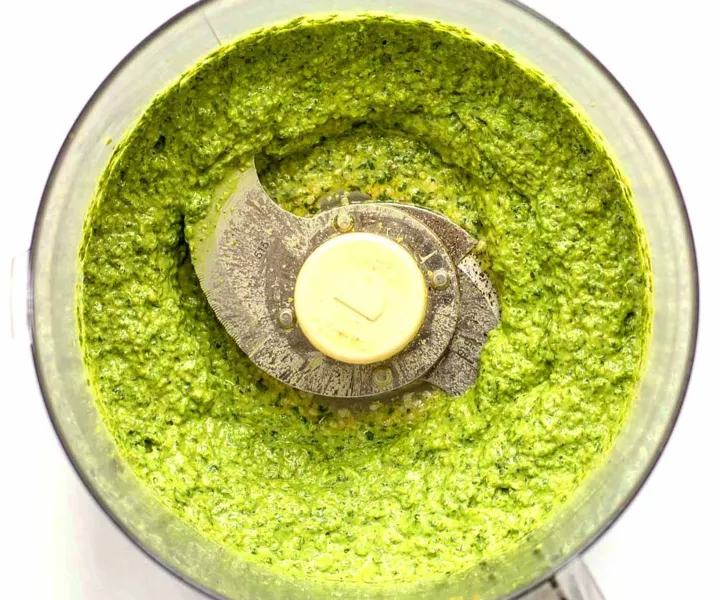
In the bowl of a food processor or high-powered blender, place the pine nuts, halved garlic cloves, shredded parmesan cheese, basil leaves, salt, and freshly ground black pepper. Pulse a few times to form a thick mixture with coarse, crumble-like texture.
Then, with the processor running on low speed, gradually pour in the extra virgin olive oil through the feed tube until you reach a finely crumbled thick paste, or pulse a little longer for completely smooth texture.
*If your machine is fully sealed, add the oil in 2–3 small batches, pulsing briefly between each addition.
Scrape down the sides with a spatula and give it a final stir to make sure everything is evenly combined.
Add your freshly made pesto over bruschetta, toss it with gnocchi or pasta, or mix into your favorite vegetables and sides. If you’d like to save some for later, spoon it into a clean, dry jar and refrigerate or freeze.
Storage
At room temperature
Pesto sauce shouldn’t be left at room temperature. If it isn’t served right away, store in the refrigerator or freeze it.
In the refrigerator
Keep the sealed pesto in a clean jar or airtight container for up to 3 days.
Add a thin layer of olive oil on top to preserve the green color (optionally).
In the freezer
Store flattened pesto in a freezer bag or portion it into silicone cube molds. Once solid, transfer cubes to a freezer bag and store for up to 3 months.
Thaw in the refrigerator for a few hours or defrost briefly in the microwave. Also, you can also add frozen pesto directly into hot, freshly cooked dish after taking it off the heat.
Notes
Check the garlic cloves by halving them, if there is a yellowish or green sprout, remove it, this can add some bitterness to your pesto.
Pine nuts in this recipe are used raw, but they can also be lightly toasted for a few minutes to add a deeper, aromatic note.
For a vegetarian pesto, use a hard aged cheese labeled “vegetarian” instead of traditional Parmigiano Reggiano.
FAQ
What is pesto?
Pesto is a bright green, fresh Italian sauce made by blending basil leaves with aged hard cheese, pine nuts, garlic, olive oil, and a touch of seasoning into a smooth, aromatic paste. Traditionally it was crushed using a mortar and pestle, but nowadays there are faster and easier ways to prepare it. Like in this recipe, it is blended in a food processor, which saves a lot of time.
Although the classic recipe is a staple, there are countless variations. By adjusting the proportions, you can create a sauce that’s milder or more robust in flavor, lighter or thicker in texture. Ingredients can also be easily substituted depending on what you have on hand, your dietary needs, or the dish you are serving it with. Pesto is commonly paired with pasta, cheesy ricotta gnocchi, or roasted vegetables, but it also works beautifully as a salad dressing, a topping for sourdough bread or focaccia, or a flavorful addition to many side dishes.
Can I make pesto without pine nuts?
Absolutely. While traditional Italian pesto uses pine nuts for their mild, buttery flavor and creamy texture, you can easily substitute other nuts or seeds, or even make pesto completely without nuts.
The closest alternatives are cashews and blanched almonds, giving pesto a smooth, creamy consistency. Walnuts a great option too, adding a deeper, earthier flavor (use blanched kernels for a cleaner taste, since the skins can add slight bitterness). Depending on the substitute, you may need to adjust the amount of nuts or olive oil slightly to achieve the texture you prefer.
For a nut-free version, sunflower seeds, pumpkin seeds, or hemp seeds are excellent options with their own unique flavor. You can also skip the nuts and seeds entirely, adjusting the amount of cheese slightly to bind the ingredients smoothly and keep the pesto rich and creamy.
Why did my pesto separate?
Pesto is a delicate emulsion of water and fat, even small missteps can cause it to separate. One of the reasons is basil that hasn’t been dried well and the fat can't mix evenly into the paste because of excess water, making the sauce uneven.
Another common reason is adding the olive oil all at once, which can overwhelm the mixture. Instead of emulsifying smoothly, part of that oil separates and rises to the surface.
Pesto can also split when it is blended for longer than it should be. When it is overprocessed, its structure breaks down and can no longer hold the fat and water together, causing it to separate.
Is pesto supposed to taste bitter?
Pesto is not supposed to taste bitter; its flavor should be fresh, aromatic, nutty, and lightly garlicky. Bitterness, however, can appear from several factors: if you use mature basil leaves or stems, they tend to be more pungent; rancid pine nuts can add an unpleasant edge; garlic cloves with yellow‑green sprouts may taste harsh; and olive oil is too intense or bold can overwhelm the balance. Do a taste test beforehand to be sure each ingredient is high quality. But other than that, the reason your pesto might turn bitter is over‑processing — blending for too long releases bitter compounds, giving that unpleasant taste.
If your pesto turns out bitter, add a few drops of fresh lemon juice, tasting as you go so it doesn’t become too sour. Alternatively, add it to a dishes where the bitterness is less noticeable.
Why is my pesto runny?
Thin, runny pesto usually happens when the basil leaves aren’t dried properly after washing, which makes the sauce more liquid. It can also become runny when the water-fat ratio is too high, either because too much basil is added or the fat content is reduced. But the most common mistake is simply over-blending — the basil gets over-processed and releases moisture, making the mixture become runny and watery.
To fix runny pesto, gently stir in finely grated cheese, chopped nuts and basil leaves. This helps thicken the sauce. Or you may not need to fix it at all — a thinner pesto can be great as a salad dressing, a swirl in a cream soup, or a sauce for vegetables and pasta, where a similar consistency can actually be an advantage.
How much pesto should I use?
There is no strict rule, the amount of pesto depends on the dish you are preparing and how bold you want the flavor to be. As a general guide, you can use about 2–4 tablespoons per serving for dishes where pesto is a main part of the flavor, and roughly 1-2 tablespoon for lighter meals or sandwiches.
When following a recipe, you can easily adjust the amount of sauce based on portion size, the total weight, or a specific ingredient — whether you’re making pesto for a family pasta dinner or preparing a batch to keep for later use.