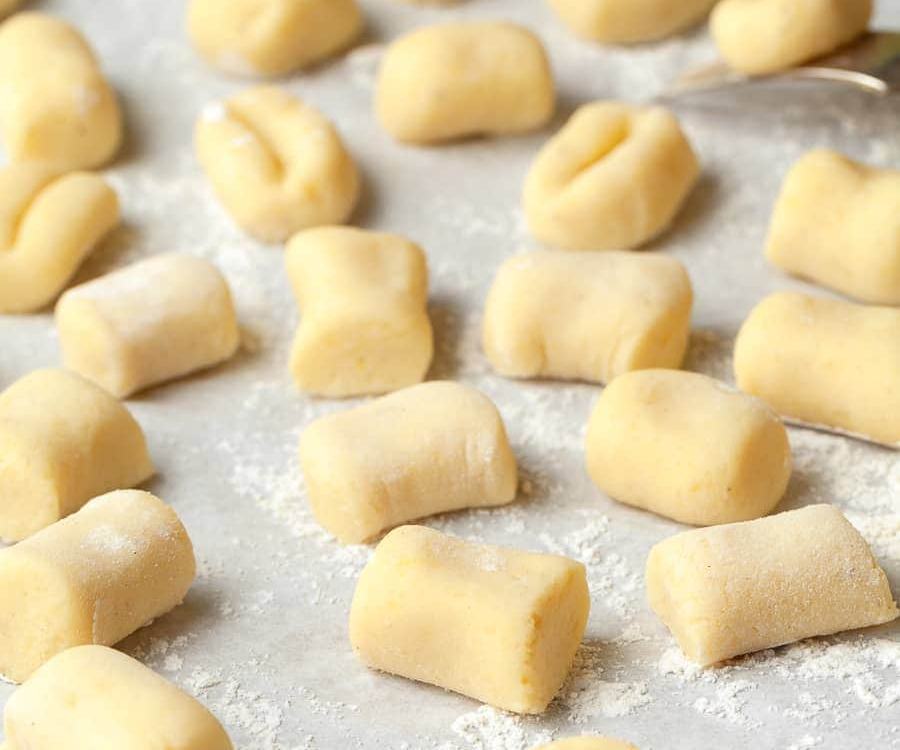
Ricotta Gnocchi
A quick and easy recipe for delicate ricotta gnocchi. Made with just a few basic ingredients for a soft, airy, and puffy texture.
Nutrition per 100g
Ingredients
- 380g Ricotta cheese, strained
- 1piece Eggs, without shell
- 125g All-purpose flour, plus more for rolling
- 2g Salt
Method
Place the ricotta cheese in a fine mesh strainer over a bowl and leave to drain for at least 3-4 hours in the fridge. (optional, if use dry ricotta varieties)
In a large mixing bowl, combine the ricotta cheese with the egg and salt, then mix in the all‑purpose flour. The dough should feel soft and sticky.
Flour your work surface and spoon out a portion of dough that’s easy to work with at a time, keeping the rest in the bowl while you shape.
Roll the dough into a rope about 1.5 cm thick, then cut it into bite‑sized pieces and move the gnocchi onto a tray lined with parchment paper. Continue with the remaining dough — spoon, roll, cut, and place neatly on the sheet.
Bring a wide pot or saucepan of salted water to a boil. Add the gnocchi one by one. Once the bubbles start to rise again, adjust the heat to a gentle boil. Leave the gnocchi undisturbed until they float to the surface, cook for one more minute, until slightly puffed up.
Lift the gnocchi out with a slotted spoon and transfer them into a serving dish.
Serve with a drizzle of olive oil, or some butter, sprinkle with grated cheese, fresh herbs, or pair with your favorite sauce.
Storage
At room temperature
If you do not plan to cook the shaped gnocchi within 30 minutes, it is best to refrigerate or freeze them immediately.
Cooked gnocchi should not be left out at room temperature for more than 2 hours.
In the refrigerator
The dough can be stored for up to a day before rolling and cooking.
Shaped gnocchi can rest for up to an hour. With longer refrigeration, they tend to soften and may release moisture, losing their shape and making them harder to remove from the board. It is best to freeze them if you aren't cooking them within that hour.
Cooked gnocchi can be stored for up to 3 days in an airtight container; Reheat in a skillet over medium heat, or microwave.
In the freezer
Store shaped gnocchi placed in a single layer on the sheet, uncovered. Once solid, transfer to a resealable bag and keep frozen for up to 3 months. Cook straight from the freezer without thawing.
To freeze cooked gnocchi, let them cool completely, and follow the same method as shaped. Reheat from frozen in a skillet over low to medium heat.
Notes
If your ricotta feels watery, it’s best to drain it for at least few hours. Otherwise, you’ll end up adding extra flour, which may affect the delicate texture of gnocchi.
Since the dough is meant to be sticky, it’s much easier to work with small, manageable portions at a time. If you try to handle the entire batch at once, you’ll end up using more flour than needed to keep it from sticking, which can eventually make the gnocchi feel heavy. (while you working with one rope, the main dough is already absorbed the flour, so there is again has to be used the extra flour that we dont need)
FAQ
What to do if the dough feels too wet?
If the dough feels too wet, adjust the consistency by mixing in a little extra flour — no more than one spoonful at a time — until the mixture is no longer runny, but the dough should stay sticky and hold its shape when rolled.
Why do my gnocchi fall apart while boiling?
There are a few reasons why this happens.
If the gnocchi are cooked in a rolling boil, the vigorous bubbles will literally “beat” the delicate pieces. Once you add them to boiling water and the bubbles begin to rise again, adjust the heat so the gnocchi cook gently in calm water with small lazy bubbles.
Another reason is stirring them before they set properly — at the very beginning, their structure is fragile and not yet stabilized, so early movement causes them to fall apart. Wait until they set and float up on their own.
Also, if there isn't enough flour, hot water quickly gets inside and tears the pieces apart. Adjust the flour depending on the moisture of your ricotta to keep the dough just right.
Why are my gnocchi sticking together?
When boiling, gnocchi may stick if you place too many of them into a small or narrow pot, as they will bump into each other. Use a large, wide pot that fits the amount of gnocchi you are making, so they have plenty of room.
If they stick once drained, that is likely because they were left for too long in a heap. Spread them in a single layer, or coat them with olive oil or butter so they slide.
As gnocchi cool, their structure firms up. If pressed together, they will glue into clumps. Arrange them in a single layer on a tray so they keep their shape.
How to know when gnocchi are ready?
You’ll know gnocchi are ready once all of them float to the surface. After that, give them another minute, depending on their size, so they can puff up slightly. They should be tender but not overly soft.
My gnocchi turn out soggy — how can I prevent this?
Make sure the ricotta you use isn't too wet, since excess moisture can weaken the dough (some ricotta varieties are naturally drier, while others have to be drained). When cooking, lift the gnocchi out promptly once they float and puff, if they sit in the water too long, they’ll absorb excess liquid and turn soggy and mushy.
Can I make ricotta gnocchi ahead of time?
Sure, you can store shaped ricotta gnocchi in the freezer until ready to use and then boil them directly from frozen. Make sure to use a large pot of water so the temperature doesn't drop significantly when adding them.
Alternatively, you can boil the gnocchi and saute them later (just keep in mind that the longer they sit after cooking, the more their texture firms up). To do this, arrange the cooked gnocchi in a single layer so they don’t stick together. Once your sauce is ready, add the gnocchi to the pan and warm them through. However, for the best texture, it is preferable to toss them with the sauce right after boiling while they are still puffed and soft.