Does Parboiling Make Better Roast Potatoes?
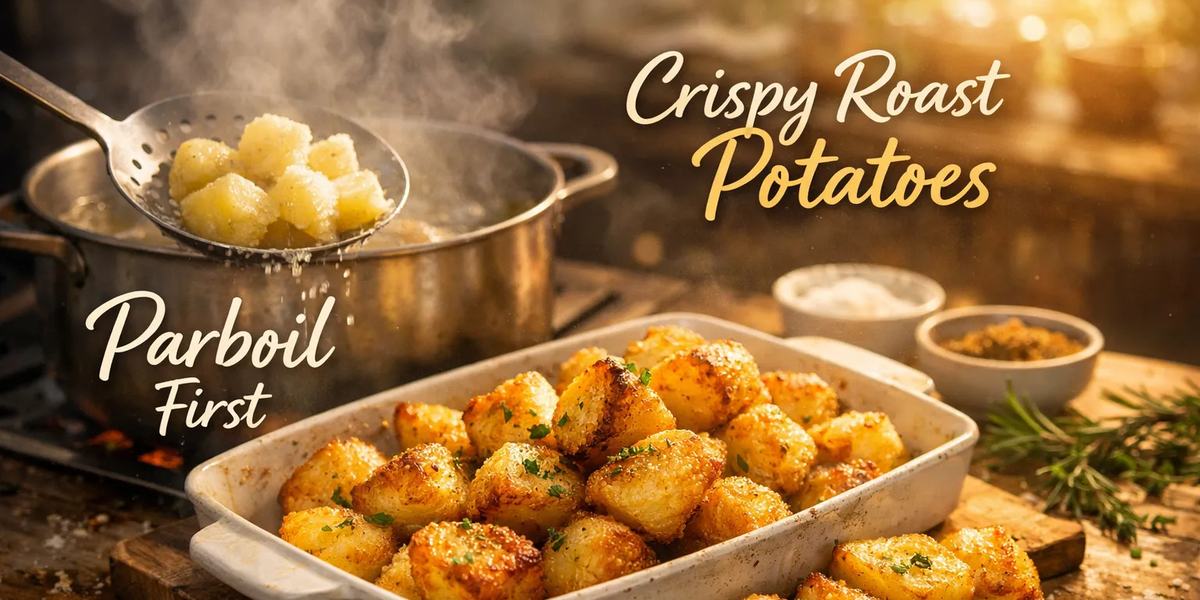
Parboiling is one of the most debated steps when making roast potatoes. For some, it’s an essential step to get truly crispy potatoes, while for others it feels like extra time without making much difference . In this article, we’ll look at whether parboiling actually makes potatoes better, what it changes during cooking, and when it really makes sense to use it — and when it doesn’t.
What “Better” Actually Means
Before understanding the effect of parboiling, it’s important to define what “better” actually means. With roast potatoes, it mostly comes down to texture: a crispy, golden outside and a soft, fluffy inside. The outer layer should be well browned and firm enough to give a proper crunch, while the inside stays light and tender.
The texture is the main factor here. Different cooking methods affect the surface, moisture levels, and how starch is distributed — all of which later decide how the crust forms. Parboiling is simply one way to influence these factors early on.
Roasting vs. Parboiling
What Happens at Direct Roasting
When potatoes are roasted without parboiling, they go through the whole cooking process in a single stage — straight under dry oven heat.
The texture in this method is well balanced. The outer layer slowly dries out and firms up, forming an even, golden crust with a steady, gentle crunch. There’s no prior change to the surface structure, so the crust develops gradually as it is.
Inside, the potato becomes soft through its own steaming effect, but it stays fairly firm and structured rather than falling apart or turning fluffy.
This gives a stable and predictable result. So the real question becomes what parboiling actually changes — because it doesn’t replace this method, it simply alters the starting condition of the potato before it goes into the oven.
What Parboiling Changes
During this step, the potato’s original dense structure begins to change. The raw, firm interior becomes slightly softer and less dense, and the surface loses its smoothness. As this change develops, starch gelatinization begins. Starch granules absorb water, swell, and lose their rigid structure. At the same time, the cell walls gradually weaken and can no longer fully hold the expanding starch. As a result, some of it moves toward the surface, forming a thin, sticky layer that later helps create a more pronounced, textured crust when roasted. The inside, in turn, becomes softer and more tender after parboiling.
This structural shift is also where timing starts to matter. The extent of the transformation depends on how long the potato is held at this stage, but the key is not the exact minutes — it’s the final texture. The goal is to reach a point where the outer layer is clearly softened and slightly yielding, while the inside is still firm enough to hold its shape. This balanced stage prepares the potatoes ideally for roasting, since timing naturally varies with size and type rather than a fixed rule.
The Hidden Step
After parboiling, the surface of the potatoes becomes soft and pliable, and in this state it’s much easier to roughen it up. With a light mechanical movement, the outer layer loses its smooth finish and turns into a rough, uneven surface with small breaks and raised edges. This increases the overall surface area and creates a more textured exterior, which later interacts better with fat and, under high oven heat, develops a more pronounced crust.
But before this step, it’s important to let excess moisture evaporate. After draining, some water remains on the surface and in the outer layer of the potato, and if it’s not allowed to dry off, it turns into steam during roasting, slowing down crust formation. A short resting period after boiling allows this moisture to evaporate naturally, leaving the surface drier and better prepared for crisping.
Parboil or Not: The Real Difference
With parboiling, the surface of the potatoes is already structurally changed: it is rougher and carries a layer of released starch. When this surface is exposed to high oven heat, it browns more intensely, while the presence of oil helps this process along by improving heat transfer and promoting more even drying. Salt further enhances moisture release, speeding up the formation of a drier, more defined crust — thicker, richer, and with a deeper, more “fractured” crispness. With each bite, it gives a distinct crunch, followed by a soft, fluffy interior.
Without parboiling, the crust develops more evenly, with a denser and smoother texture. It is still a very good result, becoming golden and crisp, especially when oil and salt are added, but the crunch feels steadier and firmer rather than delicately brittle. Inside, the potato remains cohesive and slightly dense, yet tender from gentle steaming, holding its shape without breaking apart.
When Parboiling Doesn’t Work
Parboiling gives the best results when the potatoes are cooked to just the right point, if this balance is missed, the final texture shifts noticeably.
If the potatoes are overboiled, their structure becomes too soft before they reach the oven. The surface starts to break down too much, and instead of a controlled roughness, it turns more fragile and slightly waterlogged. In the oven, this makes it harder for the potatoes to hold their shape and results in a softer, less defined crust.
If excess moisture isn’t allowed to evaporate after boiling, the surface stays damp and begins to act like a layer of steam during roasting. In this case, heat is first used to drive off moisture rather than develop browning, so the crust forms more slowly and with less intensity, even with oil and high heat.
If the surface isn’t gently roughened after parboiling, the outer layer remains too smooth and intact. In this state, it doesn’t interact with fat and heat in the same way, and while a crust still forms, it tends to be thinner and more delicate.
The type of potato also plays a role. Varieties differ in starch and moisture content: higher-starch potatoes break down more easily during parboiling and create a more textured surface, while waxier varieties hold their shape and develop a more subtle crust. This influences how noticeable the effect of parboiling will be.
Roasting conditions matter just as much. If the oven isn’t fully preheated, moisture leaves the surface more slowly and browning develops less effectively, leading to a lighter crust. An overcrowded tray creates a similar effect — the potatoes start to steam rather than roast, which reduces crispness.
In the end, all of this comes down to one thing: parboiling works as a tool that enhances texture, but only when the conditions are properly controlled.
Is It Actually Worth It?
Parboiling before roasting is truly worth the extra time if the goal is to achieve a deeply crisp, thick, fully developed crust that shatters delicately when you bite into it, paired with a soft, tender, melt-in-your-mouth, fluffy interior. This recipe Extra Crispy Golden Roasted Potatoes Recipe is a great way to try this method in practice.
If time is limited or a simpler process is preferred, direct roasting without parboiling is still a great option, and recipes like Roasted Baby Potatoes and Spicy Potato Wedges are perfect examples of this method in practice, delivering an excellent, straightforward, rustic result. In the end, whether that extra step is worth it comes down to personal choice.