Baked Potatoes: Why Every Step Matters
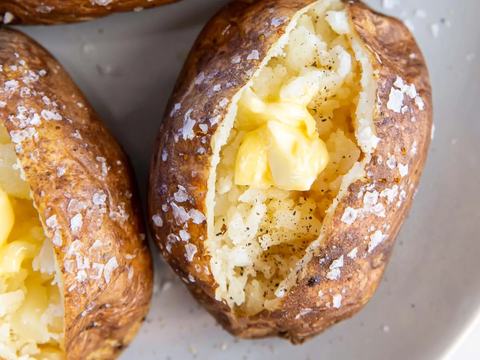
Baked potatoes are more than just a side dish—they’re a timeless culinary classic that can stand proudly on their own. What makes them truly exceptional is the balance of crisp skin and fluffy flesh. Achieving this texture is not a matter of chance but of method: the right potato variety, preparation steps, and baking essentials. Understanding how each stage works together to shape the outcome.
Choosing the Right Potato
Not all potatoes are created equal. Different varieties behave very differently under heat, which is why choosing the right type has a direct impact on the final texture.
- Starchy Potatoes: Varieties like Russets or Maris Piper are the gold standard. Their high starch and low moisture content allow the interior to become light and fluffy while the skin turns golden and crisp. This texture is considered the traditional standard for baked potatoes.
- All-Purpose Potatoes: Varieties like Yukon Golds or Marabel have a balanced starch-to-moisture ratio. They sit between starchy and waxy potatoes in texture, offering a balance of creaminess and softness, producing a softer-style baked potato.
- Waxy Potatoes: Red or fingerling potatoes hold their shape well due to high moisture. They are less ideal for a traditional fluffy bake, though they work if you prefer a firmer, more moist texture that stays compact after baking.
Initial Preparation
Even before baking begins, a few small preparation steps help create the right environment for crisp skin and even cooking.
Thorough Drying
Water is the enemy of browning. Wipe the potatoes after washing with a lint-free kitchen towel or paper towels until the skin looks matte. Let them rest for a few minutes on a board to allow any remaining droplets to evaporate naturally.
This step may seem minor, but excess surface moisture delays crisping and encourages steaming instead of roasting.
Piercing
This is is a small but vital step. Use a fork to prick the skin, creating tiny vents. This allows internal steam to escape gradually. Without these vents, trapped steam builds pressure inside, which can cause the potato to split or even burst during baking.
Building the Crust
As the potato bakes, heat gradually changes the texture of the outer layer. Oil and salt both affect this process in different ways.
The Role of Oil
While potatoes can be baked without fat, their skin tends to become thinner and slightly papery. Applying a thin, even coat of oil creates a frying-like effect as the surface heats up. When it reaches optimal temperatures (285–320°F / 140–160°C), the oil helps transform surface starches into a thick, golden-brown crust.
Different fats affect the outcome differently. Using high-smoke-point oils, such as canola or avocado oil, ensures the skin crisps up cleanly without burning. Butter is less suitable for this process, as its water content and milk solids release steam and can prevent the skin from reaching a proper crisp.
About one teaspoon per medium potato is enough—more than that can make the skin feel greasy rather than crisp. To get the best results, oil should be applied to a dry surface, as it does not stick evenly to wet skin, leaving the surface patchy and unevenly baked.
The Power of Salt
When combined with oil, salt forms a crust-like layer that intensifies crunchiness. Salt also acts as a dehydrator, drawing out tiny droplets of moisture from the surface cells. This allows moisture to evaporate efficiently through the thin film of oil.
Kosher or coarse sea salt is preferred because the large grains do not dissolve immediately, providing a better texture. A light sprinkle creates gentle seasoning, while rolling the potato in salt produces a thicker, more savory crust.
For those who prefer a cleaner, more natural flavor, skipping the salt is always an option—the result will feel more delicate and crusty rather than distinctly salty.
Baking Essentials
Several baking conditions influence how the potato cooks in the oven, including temperature, airflow, and moisture management.
Foil vs. Naked
The difference lies in how moisture is managed during baking, shaping the texture of both skin and flesh.
When enclosed, foil traps steam, effectively steaming the potato inside its own jacket. The skin stays soft and elastic, while the flesh becomes denser and moist. In this method, oil is unnecessary, as it cannot crisp the skin under foil.
Without foil, moisture escapes directly into the oven air. This allows the skin to dry and form a classic salty crust, while the interior turns light and fluffy.
Oven Setup
To ensure even cooking, potatoes should be placed about 2 inches (5 cm) apart. When the tray is crowded, air cannot circulate properly, causing the potatoes to “sweat” and resulting in a soft, steamed skin.
For large batches, use multiple baking sheets and rotate them during the process. Using convection mode can accelerate moisture evaporation for an even faster crisp.
Oven Temperature
Different temperatures change not only the cooking time, but also the balance:
350°F / 180°C: Slower baking produces a very soft, creamy interior, but the skin remains thinner and requires more time for steam to evaporate.
400°F / 200°C: The classic balance point; the higher heat forces moisture out quickly enough to create a crisp crust while keeping the flesh tender.
425°F / 220°C: Faster baking with a much crunchier exterior, though it requires close attention to prevent drying out.
Testing for Doneness
Potatoes are naturally dense, and heat moves through them slowly. As a result, baking usually takes 45–75 minutes, depending on variety, size, and oven temperature.
To check for doneness — insert a fork, which should slide into the center without resistance. Alternatively, use a thermometer: the potato is fully cooked when its internal temperature reaches about 210°F (99°C).
The Art of the Perfect Bake
The baked potato proves that simplicity can be extraordinary. Small decisions—potato variety, drying, oiling, salting, temperature, and airflow—each influence the final texture in noticeable ways. Together, they create the balance of crisp skin and fluffy interior that defines a well-executed baked potato.
Whether served as a simple accompaniment or as a meal on its own, it remains one of the most reliable and comforting foundations in any kitchen.
To bring these insights into practice, see Whole Baked Potato Recipe for achieving crisp skin and a fluffy center.