Vanilla Panna Cotta
An irresistibly creamy, delicately sweet panna cotta with a soft, quivering texture.
Nutrition per 100g
Ingredients
- 240ml Heavy whipping cream, 30-36% fat
- 110ml Whole milk
- 35g Granulated sugar
- 5g Vanilla bean paste
- For blooming gelatin
- 30ml Whole milk
- 5g Gelatin powder
Method
To bloom the gelatin, pour cold milk over the granulated gelatin in a small bowl and let it soak undisturbed for 5–10 minutes.
In a saucepan, combine heavy whipping cream, whole milk, granulated sugar, and vanilla bean paste. Warm over medium‑low heat, stirring occasionally, to dissolve sugar; the mixture should reach about 60°C–75°C.
Remove the pan from the heat, scrape the bloomed gelatin and whisk thoroughly until fully dissolved.
For an extra‑smooth texture, strain the mixture through a fine‑mesh sieve into a bowl, or pouring pitcher.
Divide the panna cotta mixture into the prepared cups or ramekins and refrigerate until set, about 4-6 hours.
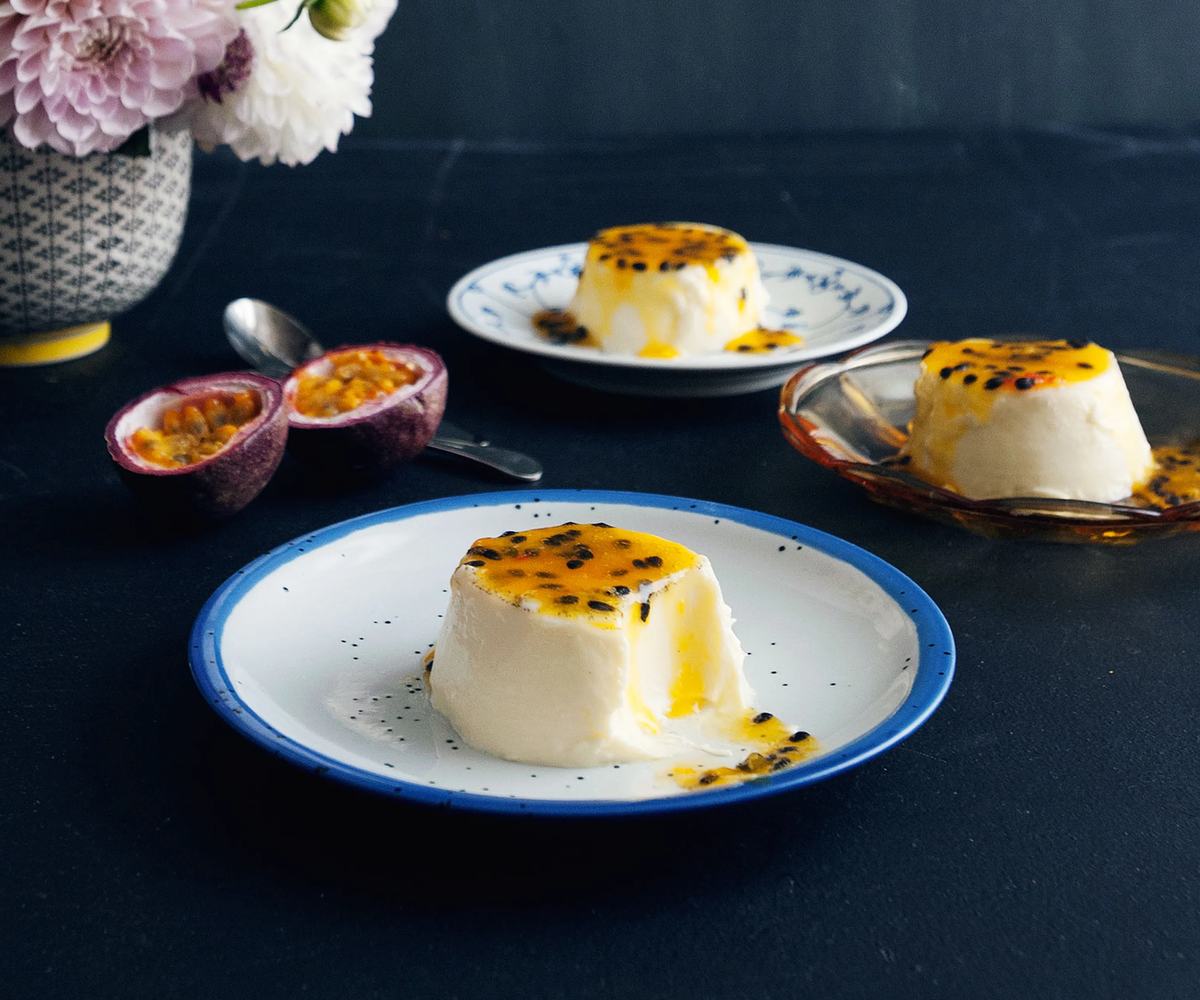
To release panna cotta, run a thin knife around the ramekin edge, then dip it in hot water for 5–10 seconds (water should reach almost to the rim). Wipe the ramekin, place a serving plate on top, flip, and gently lift to unmold.
Top with fresh berries or a fruit coulis of your choice and enjoy its silky-smooth texture.
Storage
At room temperature
Once plated, panna cotta can sit for up to 2 hours; the texture may soften slightly. For longer storage, keep it refrigerated.
In the refrigerator
Cover each ramekin with cling film and store for up to 3 days. Keep the panna cotta molded until it is served.
In the freezer
Freezing panna cotta is not recommended due to its high water content; upon thawing, it may release moisture and the texture can turn slightly grainy.
Notes
Granulated gelatin should be bloomed before use. Adding it dry straight into a hot mixture makes the granules clump, dissolve unevenly, and lose part of their strength, leaving the dessert uneven.
Warming the cream and milk helps both the sugar and gelatin blend smoothly. If mixed cold, the sugar won’t dissolve and the gelatin will clump. Keep the mixture temperature within the recommended range so it steams gently but never boils.
Straining the mixture through a fine‑mesh sieve removes any undissolved gelatin granules, skin formed from the heated cream mixture, and tiny air bubbles that may appear during mixing, making the panna cotta smooth and silky.