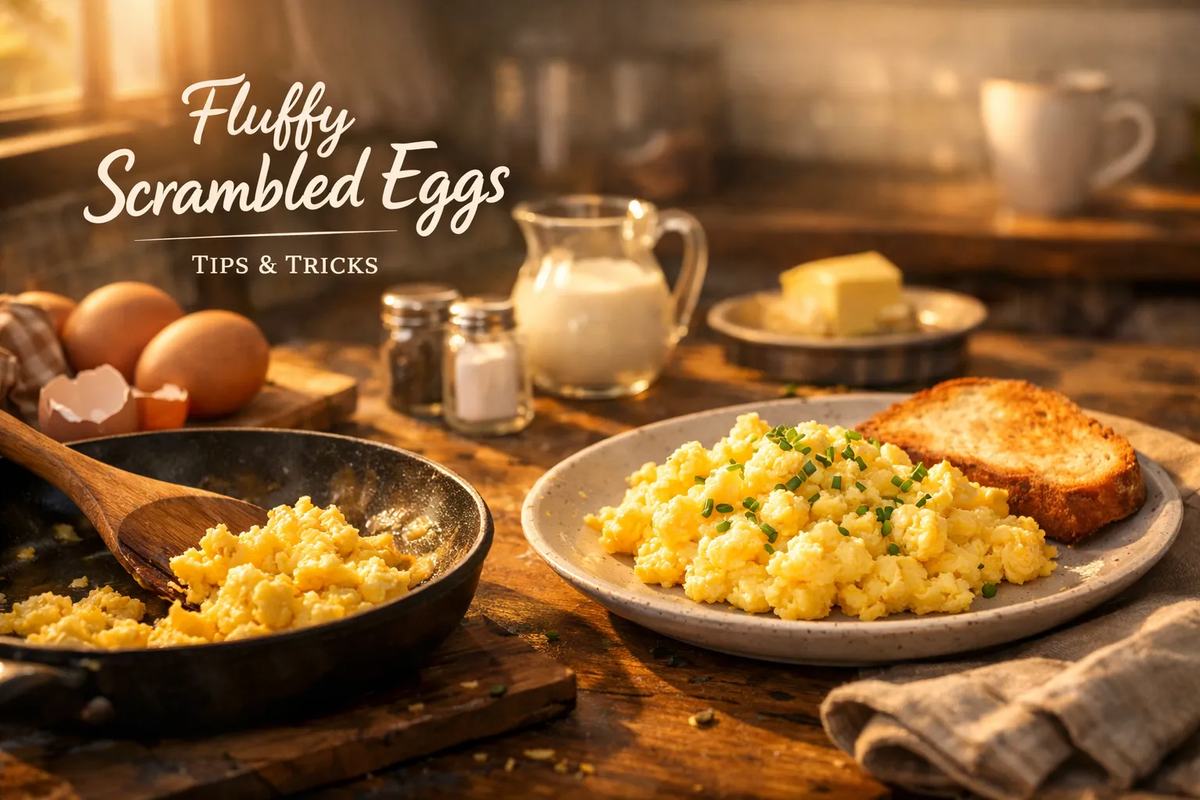
How to Make Perfect Scrambled Eggs Every Time
Beyond Simplicity
Scrambled eggs appear on every short-order menu and in every home kitchen for a reason: they're fast, filling, and require almost nothing in the way of special equipment. However, despite their outward simplicity, this remarkably delicate dish holds nuances that often go unnoticed. Even for experienced cooks, achieving a consistently glossy, creamy result involves navigating a series of subtle variables. Consistently reaching that desired result comes down to a precise sequence of actions at every step.
At The Recipe Cloud, we've tested scrambled eggs across dozens of variable combinations, adjusting pan type, fat choice, liquid ratio, heat level, and pull timing. The consistent finding is that technique is the dominant variable, though pan choice, fat selection, and liquid additions all play a meaningful supporting role. This article walks you through each decision point so you can reproduce either a refined, creamy scramble or bold, fluffy curds with confidence, starting with your very next pan.
Liquid in scrambled eggs: cream, milk, water, or nothing?
Why milk is the most popular choice and the most problematic one
Milk remains the most common addition to scrambled eggs primarily because it is a kitchen staple—always accessible, cost-effective, and historically used to "stretch" portions. However, this convenience comes at a cost, making it the most problematic choice for texture. The issue lies in the chemistry of the pan. Since whole milk is 87% water, that moisture doesn't bond with the egg proteins; instead, it dilutes them. This dilution disrupts the protein structure, preventing the eggs from forming a cohesive, tender curd. During cooking, this excess water either steams off—leaving the eggs rubbery and overcooked—or pools under them on the plate, a phenomenon known as "weeping."
How cream and half-and-half change things
While milk simply thins the mixture, cream introduces fat that acts as a structural "buffer" between egg proteins meaning your eggs will "never cry" or leave a pool of water on the plate. As the eggs cook, those fat molecules coat the proteins, allowing them to fully integrate into the egg emulsion. This process keeps the proteins moist and tender during coagulation, resulting in a creamy, cohesive texture.
Alternatively, Half-and-Half serves as the practical "middle ground." It contains enough fat to buffer the proteins, but enough milk content to prevent the texture from feeling intensely creamy. It is the ideal choice for everyday cooking when you want a texture that is lighter yet creamy result.
Water vs. No Liquid:
In contrast to dairy, adding water focuses on physics rather than richness. The heat turns the water into steam, expanding the mixture to create a lighter, airier curd while keeping the egg flavor front and center. However, for those who want to concentrate the egg flavor fully, skipping liquid entirely is the most direct approach. Without any dilution from water or dairy, you produce a firmer, more cohesive curd with a deeper, more intense savory taste. Yet, without a liquid to protect the proteins, the eggs become far more sensitive to heat; you must use enough butter or oil on the pan to act as a barrier. Without this layer of fat to cushion the contact with the heat, the eggs may seize up instantly.
The Golden Ratio: Timing and Proportions
How Much is Enough?
The liquid you choose acts as a structural architect for your eggs, and while each method offers a distinct path to success, the final product always depends on the ratio as well. Follow the "Golden Ratio" of 1/2 tablespoon per egg (or 1 tablespoon per two large eggs). For those seeking maximum richness with heavy cream or half-and-half, you can slightly increase this to 1 tablespoon per egg, as the extra fat provides a more stable buffer for the proteins.
However, keep in mind that more is not always better; eggs can only "hold" a specific amount of moisture before the protein bonds break down. Exceeding this limit forces the eggs to shed the excess liquid as they cook, resulting in a rubbery texture and a watery mess on your plate rather than a fluffy and soft finish.
Integration: When Timing is Everything
When you introduce your liquid or fat completely changes the "physics" of the scramble. Whisking your liquid into the raw eggs before they hit the heat—Pre-Integration—is the standard approach for building structure. This loosens the protein bonds immediately, allowing air to be trapped more easily during whisking. This approach is ideal for all additions, especially water and milk.
Conversely, introducing a cold splash of dairy or a knob of butter just as the eggs reach the finish line is a technique known as Thermal Emulsion. This cold addition acts as a "thermal brake," dropping the temperature of the pan instantly to prevent overcooking. Instead of being cooked inside the protein network, the fat creates a velvety glaze that coats the curds, resulting in a custardy mouthfeel. Note that this method only works for fat-based additions like cream or butter; adding water at the end would simply leave the eggs wet and diluted without creating that signature professional glaze.
Ultimately, whether you choose the steam-driven lift of water, the fat-stabilized silkiness of cream, or a strategic timing of your additions, these choices are only the beginning. Selecting the right liquid sets the foundation, but the final result comes down to what actually happens once the eggs hit the heat.
To ensure they cook perfectly, you need to consider which Pan to use to prevent sticking, the right Heat Barrier to protect the texture, and—most importantly—understanding the exact moment the eggs are ready to be pulled from the stove before serving.
Pan Choice and Why it Matters
A non-stick skillet is the most reliable choice for most cooks; its wide surface area encourages evaporation, making it ideal for creating large, airy, and fluffy folds. While stainless steel can be used, it requires mastering precise temperature control to create a natural "glide" with the fat and prevent sticking. Conversely, cast iron should be avoided, as it retains too much residual heat, which often leads to uneven cooking or scorched curds.
To gauge the heat, use your butter as a visual guide: look for it to foam, which signals the pan is ready for the eggs. If the butter browns instantly, the heat is too high; in this case, immediately remove the pan from the burner and wipe it clean, allowing the surface to cool slightly before starting over with fresh butter.
In contrast, a deeper saucepan traps steam and slows evaporation, creating a forgiving environment for a "low-and-slow" approach. This shape keeps the eggs pooled together, which is essential for managing the constant movement required to achieve a silky, custardy finish.
Regardless of the pan choice, always use a silicone spatula for sweeping the eggs from the bottom and corners of the vessel, ensuring that no part of the mixture sits still long enough to overcook.
The Heat Barrier: Butter, Oil, or No Fat
The choice of cooking fat is a strategic decision that functions as a thermal buffer between the heat of the pan and the delicate egg proteins. Rather than just preventing sticking, the fat you choose dictates the final texture, flavor, and cooking speed of the scramble.
Butter is the culinary standard because it performs two roles at once: it coats the pan surface and contributes fat-soluble flavor compounds that the eggs absorb during cooking. It also serves as a built-in visual thermometer. The foaming stage—where water in the butter evaporates—signals a temperature range of roughly 212°F to 250°F
(100°C to 121°C), which is gentle enough to avoid scorching the proteins. If the butter browns before the eggs hit the pan, the heat is already too high, shifting the flavor from creamy to nutty. The result is a soft, velvety curd with a rich, cohesive finish.
Olive oil is an effective functional alternative, but it yields a noticeably different result. As a pure fat, it creates a glossier, silkier texture rather than a creamy one. However, olive oil possesses a pronounced flavor profile that tends to compete with the eggs rather than complement them. While it works well for specific dietary preferences, expect a firmer curd and a more assertive taste that pulls attention away from the natural egg flavor. For those seeking the technical benefits of oil without the strong taste, a more neutral oil like canola or sunflower can be used to provide a clean sear.
Skipping fat entirely is the most difficult approach to master. Without a "safety cushion" of fat to coat the protein strands, the eggs hit the heat directly and seize up instantly. Even on high-quality non-stick surfaces, a fat-free scramble tends to be lean, dry, and tight, lacking the luxurious mouthfeel and forgiveness of a traditional method. To succeed without fat, you must rely on extremely low heat and constant movement to prevent the eggs from becoming overly firm.
Mastering the Heat: Texture and Timing
Heat management is the defining variable in egg cookery because the window between a silky finish and a tough consistency is a mere 10°F (~5.5°C). Egg proteins begin to set at 145°F (63°C) and quickly become dry once they surpass 155°F (68°C).
For creamy, custardy eggs, a low-and-slow approach with constant stirring prevents rapid coagulation, resulting in fine, pudding-like curds. For light and fluffy eggs, medium heat allows the mixture to set in larger sections through occasional wide folds. Regardless of the style, you must account for carryover cooking: eggs continue to firm up for nearly a minute after leaving the pan. To hit the perfect texture, pull the pan when the eggs look about 80% done—slightly loose and glossy—and serve them immediately to let the residual heat finish the job on the serving plate.
The Golden Rule: If the eggs look perfectly cooked in the pan, they will be overcooked on the plate. Always remove them from the heat while they still appear slightly underdone and glossy to ensure they reach their peak texture as you serve them.
Mastering the Scramble
A great scrambled eggs recipe doesn't require professional skill or special equipment. It requires knowing the ratios, choosing your heat level deliberately, salting at the right time, and taking the pan off the heat before the eggs look done. That's the whole method.
If you want tested ratios for any of these methods, see this Fluffy Scramble recipe, and for a richer, more velvety result, try this Creamy version.
Both include built-in scaling to keep the proportions accurate, whether you’re cooking a single portion or for the whole family.